Hongmen (洪門): History, Brotherhood & Chee Kung Tong
Hongmen (洪門), also written Hong Men or Hung Mun, is a Chinese fraternal tradition of sworn brotherhood, mutual aid and shared cultural heritage. Chee Kung Tong (致公堂), historically called the Chinese Freemasons, is part of this wider tradition. This guide is presented by the San Francisco Chee Kung Tong Supreme Lodge, connecting the names and customs with archival evidence and our living community.
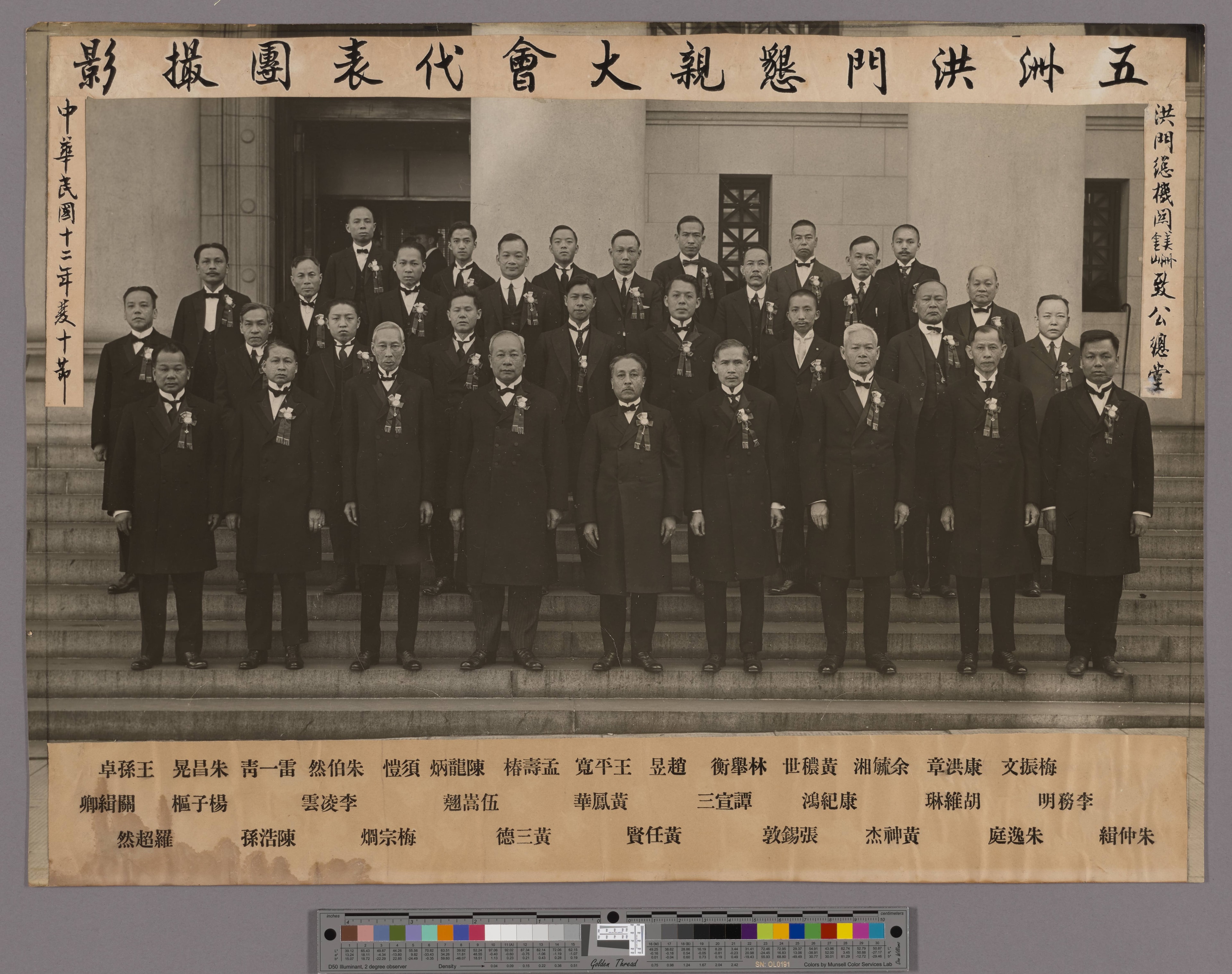
A gathering preserved in the Chee Kung Tong photographic archive. Explore the gallery for individual captions and original collection records. View the archive gallery →
Our identity · Our inheritance
We are Hongmen. We carry the brotherhood forward.
San Francisco Chee Kung Tong is a Hongmen lodge. We are heirs to the older Hongmen tradition of sworn brotherhood: a heritage of loyalty, mutual responsibility and standing together. To call ourselves descendants of Hongmen is to accept the duty of carrying that inheritance into the lives of the next generation.
Roots in an older sworn brotherhood
UC Berkeley identifies Chee Kung Tong as the Hongmen Society. Historical scholarship describes how Chee Kung Tong carried an older Chinese sworn-brotherhood tradition into migrant communities, where rituals and relationships connected people across borders. Our San Francisco history belongs within that wider Hongmen inheritance.
Hongmen descendants: an inheritance of responsibility
Our brotherhood is sustained by people who receive its teachings, honor its commitments and pass them on. A family name can be inherited at birth; a sworn brotherhood also creates kinship through trust, ceremony and obligations freely accepted. Our inheritance lives in how we treat one another, preserve our records and serve the community around us.
Remember the ancestors
The Five Ancestors tradition gives Hongmen a shared ancestral memory. At our San Francisco headquarters, the ancestral illustration at the central altar connects that memory with the place where our members gather today.
Our Thirty-Six Oaths page presents a historical document preserved in the Chee Kung Tong archive. Reading the record alongside its context helps each generation understand the commitments entrusted to the brotherhood.
We honor earlier generations by building something worthy of those who come after us. Preserving the archive, welcoming new members, sharing martial arts and lion dance, and helping our neighbors make Hongmen heritage visible in everyday life. Our story continues whenever someone chooses to carry a responsibility rather than simply remember a name.
Names vary across languages, places and historical records. Recognizing these terms helps readers connect archival photographs, newspapers and lodge histories without assuming every organization has the same local story.
Hongmen / Hong Men / 洪門
A broad fraternal heritage associated with Chinese brotherhood, ritual traditions and mutual aid.
Hung Mun / 洪門
A Cantonese-based rendering encountered in English-language lodge histories.
Chee Kung Tong / 致公堂
The name used by this San Francisco lodge and by other lodges whose histories are documented separately.
Chinese Freemasons / 華人共濟會
An English name found in historical Chee Kung Tong records. The name alone does not establish a formal affiliation with a Western Masonic grand lodge.
Our chapter of a wider story
Hongmen in San Francisco Chinatown
At 36 Spofford Street, Chee Kung Tong carries forward a local tradition of gathering, cultural preservation and community service. Our lodge connects historical records with the people who continue that work today.
UC Berkeley’s library guide records Chee Kung Tong’s establishment in 1848 and the transfer of its historical archive into the care of the C. V. Starr East Asian Library in May 2018. These records provide a starting point for learning about the lodge through documents rather than legend alone.
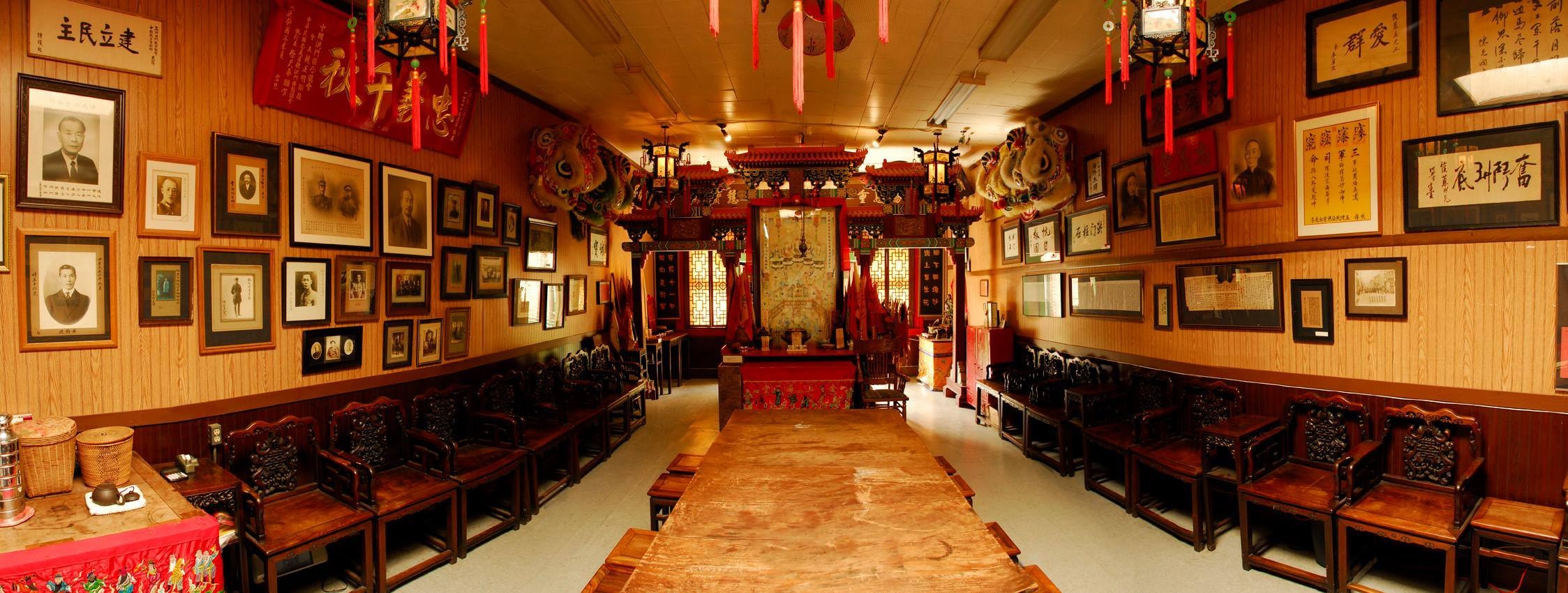
Inside our San Francisco headquarters — a place where heritage remains part of community life.
From mutual aid to public history
Our website brings together lodge history, newspaper reporting, photographs and community activities. Learn about cultural celebrations, martial arts and lion dance, volunteer leadership, and the preservation of records for future generations.
The Five Ancestors narrative has an important place in Hongmen ceremonial memory. An ancestral tradition and a dated archival record answer different kinds of questions: one expresses shared meaning, while the other helps establish particular people, events and places.
UC Berkeley’s guide identifies close links between Chee Kung Tong and Sun Yat-sen, noting that he joined a Hongmen branch in Honolulu while seeking support for revolution. Our dedicated history page explores the San Francisco connection and the sources behind its story.
A lodge was more than a name on a building. For migrants, a sworn brotherhood could create relationships of belonging beyond the family and home village. A 2024 study in Ethnic and Racial Studies describes Chee Kung Tong as a flexible association serving mobile Cantonese migrants, with rituals, objects and people linking chapters across borders. Local lodge histories help explain how that shared heritage took different forms in different places.
The National Sun Yat-sen Memorial Hall chronology records the Hongmen fundraising bureau in San Francisco on July 21, 1911. Chee Kung Tong and Tongmenghui selected its staff, and the office operated on the second floor of the Chee Kung Tong premises at 38 Spofford Street. This record shows an organized partnership for revolutionary fundraising. Read our Sun Yat-sen page for the letters, financial records and wider story.
The San Francisco collection entered the care of UC Berkeley’s C. V. Starr East Asian Library in May 2018. At the 2020 Council on East Asian Libraries meeting, the processing team described a collection of more than 5,000 items covering over a century. Letters, photographs and organizational records allow readers to follow people, decisions and relationships through original material.
Explore the ancestral narrative and its meaning in lodge culture.
For original material, start with the university’s collection guide and its digitized records. Dates, photographers and catalogue descriptions should be read alongside each image.
Hongmen is the name of a Chinese fraternal tradition associated with sworn brotherhood, ritual and mutual support. On this website, the story is told through San Francisco Chee Kung Tong records, historical research and community life.
Are Hongmen, Hong Men and Hung Mun different groups?
These are English spellings used for 洪門, reflecting different romanization and spacing conventions. The spelling alone does not identify a particular lodge or establish its founding date. Check the place, people and original records.
How is Chee Kung Tong connected to Hongmen?
Chee Kung Tong belongs to the wider Hongmen fraternal heritage. Our San Francisco lodge has its own headquarters, leadership, archives and community activities. Its history is one local chapter of a much wider diaspora story.
Can I visit or take part today?
Contact the lodge before visiting 36 Spofford Street, San Francisco. Our events and martial arts pages describe community activities, lion dance and opportunities to participate. Ask us about current arrangements and membership.
Is this the official San Francisco lodge website?
Yes. ChineseFreemasons.org is the official website of Chee Kung Tong Supreme Lodge in San Francisco. Our headquarters is at 36 Spofford Street, San Francisco, CA 94108.
Does every Hongmen lodge have the same history?
No. Local organizations have their own people, records and development. Our global guide distinguishes documented local histories rather than assuming a single founding timeline.
Where can I learn more or ask a historical question?
Explore our archives, history videos and News & Press pages, or contact the lodge through the Join & Contact page. For original archive access, consult the holding library’s current arrangements.